

LEARNING OBJECTIVES
- Principles of ECTR (EU Clinical Trial Regulation)
- Critical timelines for submission and review of a dossier
- Transition period and expected implementation
- ECTR (EU Clinical Trial Regulation)
- Role of the reviewer, collaboration with other member states and submitters
- Review requirements and use of CTIS portal
- Deadlines and planning of the medical-ethical review
- How to address questions at the submitter of the dossiers
DESCRIPTION
ECTR stands for European Clinical Trial Regulation. This is the new EU regulation on clinical trials of medicinal products for human use which replaces the existing Directive 2001/20/EC. The ECTR regulation will affect everyone involved in clinical drug research in Europe and will help improve collaboration between all parties involved.
The fundamental ECTR course to review clinical trials in the Netherlands not only helps you understand the upcoming ECTR regulation but offers a clear and in-depth understanding of the critical roles, deadlines, and planning of the new procedures for the medical-ethical review of a drug trial according to the new EU legislation. It will prepare you for its implementation in 2021.
- 3 hours
- 2 modules
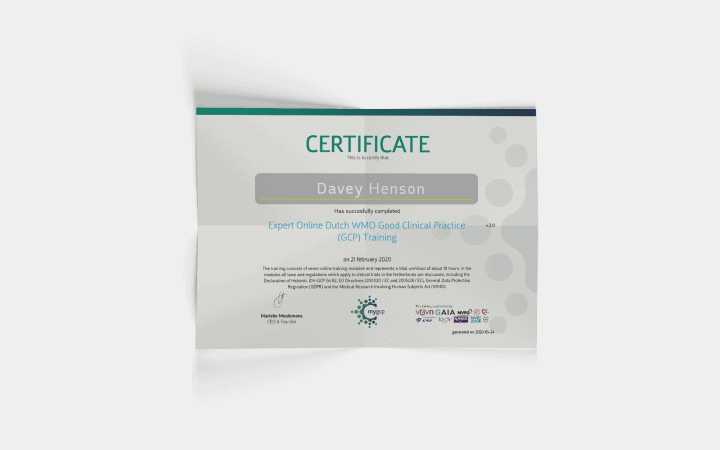
- Online ECTR certificate
- incl. Knowledge Test
- Accredited by several quality registers
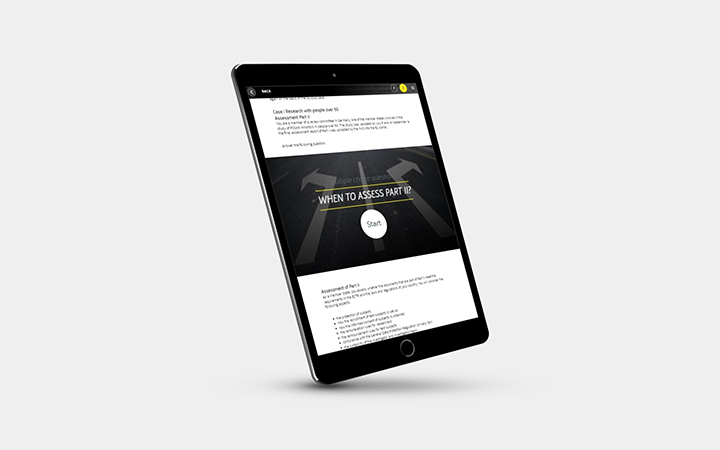
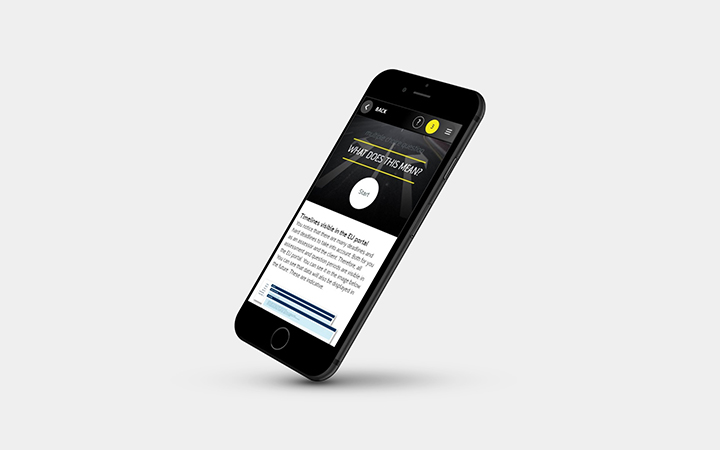
- Available on desktop, smartphone or tablet
It is an ideal course suitable for anyone involved in ethics committees or responsible for reviewing submitted clinical research dossiers. The course provides a detailed understanding of the ECTR and its implications for the assessment process and is most suitable for employees of the CCMO and members of the Dutch ethics committees.
The online course takes 3 hours and consists of the basic ECTR module, the submission module, and a knowledge test. After completion, you will receive an online ECTR certificate.
Enroll now to get started with the myGCP learning modules on your smartphone, tablet, or desktop computer.
COURSE CONTENTS
[toggles title=”Module: Introduction”]
You’ll learn the following in this module:
- Goal ECTR and difference between a Directive and Regulation
- Scope of ECTR: to which type of research is the ECTR applicable?
- Dutch ambition regarding the introduction of the ECTR
- High-level contents of the ECTR
- Opportunities, benefits, and challenges of the ECTR and submissions via the CTIS portal
- When will the ECTR be implemented and what does the transition period look like?
- Timelines of the submission- and review process according to the ECTR regulation
- Differences in the submission of a national trial and an international trial
- Results of the validation phase, Assessment part I and assessment part II
- Differences in the submission of investigator-initiated trials and sponsor (pharma/biotech) initiated trials
[/toggles]
[toggles title=”Module: Submission and review”]
You’ll learn the following in this module:
- Process steps, communication, and the result of the validation process of Part I (national) and Part II (multinational)
- Submission process via the EU-portal (CTIS)
- Determination process which member state takes the role of Reporting Member State
- Considerations for answering questions during the review process and adjustments to the dossier
- Composition review committee
- Review whether the clinical trial is included in the scope of the ECTR
- Review of completeness and acceptability of the clinical trial
- Consolidated and coordinated review
- Getting to a conclusion and the requirements to the assessment report
- Requirements for the start-up of an approved clinical trial
[/toggles]
[toggles title=”Module: Knowledge Test”]
The knowledge test includes:
- 20 questions
- Available in English and Dutch
- Feedback per question (afterwards)
- 3 attempts
- Online certificate with a score of 80 or higher
[/toggles]












matyas@igina.net –
I am excited to apply all I acquired.